Lost in the Wild Beauty of Córdoba’s Hidden Nature
You know what? I went to Córdoba expecting history and courtyards, but ended up stunned by its wild side. Wandering beyond the old city, I discovered secret rivers, olive groves that go on forever, and mountain trails with views that took my breath away. This isn’t just a cultural gem—Córdoba’s natural wonders are absolutely real, quiet, and waiting. If you think Spain’s magic stops at flamenco and tapas, think again. Let me take you through the untamed soul of southern Spain, where nature unfolds in gentle waves of green, silence speaks louder than crowds, and every path leads to a moment of peace.
Stepping Off the Beaten Path in Córdoba
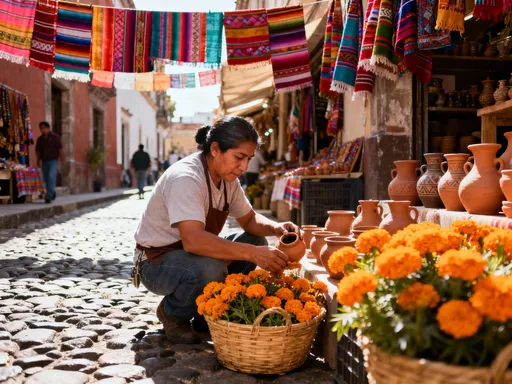
Córdoba is best known for the Mezquita, the ancient mosque-cathedral that rises like a dream from the heart of the old town, and the famous May patios, where flowers spill from clay pots and perfumed courtyards glow under Andalusian sun. These treasures draw thousands every year, and rightly so—they are masterpieces of culture and craftsmanship. But beyond the stone arches and tiled fountains, a quieter, wilder Córdoba waits. It’s a version of the city few tourists see, one where history doesn’t end at museum walls but flows into open fields, riverbanks, and forested hills.
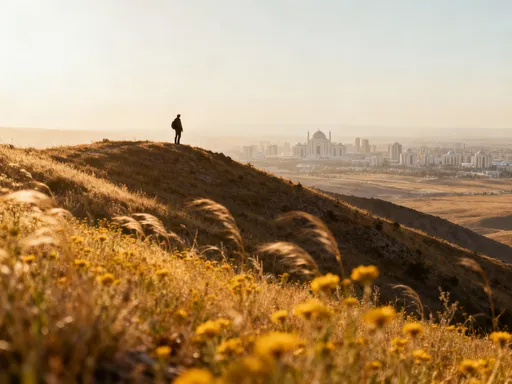
Leaving the historic center and walking just a few kilometers west or south, the noise of footsteps on cobblestones fades into birdsong and wind. The air changes—less dust, more green. The scent of wild thyme and olive trees replaces the aroma of churros and coffee. This is where Córdoba reveals itself not as a postcard, but as a living landscape. The province spans over 13,000 square kilometers, most of it rural, with protected natural areas, river corridors, and centuries-old farmland woven into the hills.
What makes this transition so powerful is its accessibility. You don’t need a car or a guide to step into this world. A simple walk along the river, a bus ride to a village on the edge of the Sierra Morena, or a bike ride through olive groves can shift your entire experience. The rhythm slows. The eyes adjust. Suddenly, you’re noticing the way light filters through eucalyptus leaves or how a kestrel hovers above a field. This is not tourism as checklist—it’s travel as presence.
One afternoon, I followed a dirt path behind the Roman Bridge, past a small orchard and into a stretch of riparian forest. There were no signs, no benches, just a narrow trail flanked by tall reeds and flowering broom. I walked for nearly an hour without seeing another person. The only movement was a kingfisher darting across the water and a turtle basking on a sun-warmed rock. In that silence, I realized how rare true stillness has become in modern travel. Córdoba, in its wilder corners, offers something increasingly precious: space to breathe, to wander without purpose, and to remember that beauty doesn’t always come with a name or a ticket.
The Guadalquivir River: A Green Lifeline Through the City
The Guadalquivir River is Córdoba’s quiet heartbeat. It flows from the mountains of Jaén, cuts through the city like a silver ribbon, and continues west toward Seville and the Atlantic. For centuries, it has shaped life here—used for irrigation, transport, and as a natural boundary between regions. Today, it remains a vital green corridor, linking urban life with the natural world. Walking along its banks, especially in the early morning or late evening, offers one of the most peaceful experiences in the city.
One of the best stretches for a quiet stroll is the path that runs from the Roman Bridge southward toward the Guadalquivir Reservoir. Here, the river widens, and the current slows. Tall poplars and willows lean over the water, their leaves whispering in the breeze. Herons stand motionless in shallow eddies, waiting for fish. Kingfishers flash by in streaks of blue. Cyclists and joggers pass by, but the atmosphere remains calm, almost meditative. This is not a manicured promenade, but a living riverbank, slightly wild and full of subtle movement.
Parque del Conde de Vallellano, located just off Avenida del Brillante, is another green oasis along the river. It’s a place where families picnic under shade trees, children play on grassy slopes, and elderly men play dominoes at stone tables. The park blends seamlessly with the river’s edge, offering benches, walking paths, and native plantings that attract butterflies and bees. It’s a reminder that nature doesn’t have to be remote to be meaningful. Even in the city, green spaces like this provide essential relief from heat and noise, especially during Córdoba’s long, hot summers.
Birdwatchers will appreciate the variety of species that rely on the river. In addition to herons and kingfishers, you might spot little egrets, cormorants, and even black-winged stilts in the wetter months. During migration season, the Guadalquivir basin becomes a stopover for ducks, waders, and raptors moving between Africa and northern Europe. With a pair of binoculars and a little patience, you can witness this quiet drama unfold without ever leaving the city limits.
What makes the Guadalquivir so special is how it connects different ways of life. Farmers draw water for their groves. Fishermen cast lines from the banks. Children learn to swim in its calmer pools. And visitors, like me, find peace in its steady flow. The river doesn’t demand attention—it simply exists, constant and generous. To walk beside it is to be reminded that some of the most beautiful things in life are also the most ordinary.
Sierra Morena: Where Wild Nature Begins
Just 40 kilometers north of Córdoba city, the land begins to rise. The flat plains give way to rolling hills, then to rugged mountains cloaked in dense Mediterranean forest. This is the Sierra Morena, a vast natural region that stretches across southern Spain and forms part of the northern border of Andalusia. It’s one of the last great wilderness areas in western Europe, home to ancient holm oaks, wild boar, deer, and the critically endangered Iberian lynx. Protected as part of the Cardeña-Montoro Natural Park, this landscape feels remote, timeless, and deeply alive.
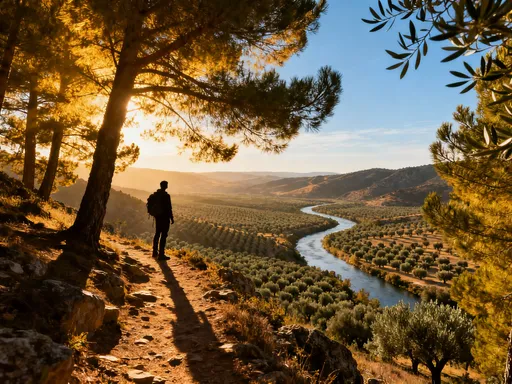
I took a day hike along the Sendero del Robledal, a well-marked trail that winds through centuries-old oak forests and opens onto panoramic views of the Guadalquivir valley. The air was cooler at this elevation, scented with pine and wild rosemary. Every few minutes, I’d stop to listen—the rustle of a lizard in dry leaves, the call of a Bonelli’s eagle circling overhead, the distant grunt of a wild boar in the underbrush. This was not a manicured park but a functioning ecosystem, where nature follows its own rules.
The trail began at a small parking area near the village of Montoro, with a modest information board and a few trash bins. From there, it climbed gently through a mixed forest of cork oaks and holm oaks, their gnarled trunks twisted by wind and time. After about an hour, the trees thinned, and I reached a rocky outcrop with a view that stretched for miles. Below, the river snaked through green and gold fields. Above, vultures rode the thermals in wide, silent circles. I sat on a sun-warmed boulder and ate a simple lunch of bread, cheese, and olives, feeling completely alone and completely at peace.
What makes the Sierra Morena so powerful is its sense of authenticity. There are no souvenir shops, no cable cars, no crowded viewpoints. The trails are maintained but not overdeveloped. Information is minimal—often just a map and a warning about ticks or heat. This is nature as it should be: accessible, but not tamed. It asks something of the visitor—respect, preparation, awareness. In return, it offers solitude, beauty, and a rare sense of connection to the wild.
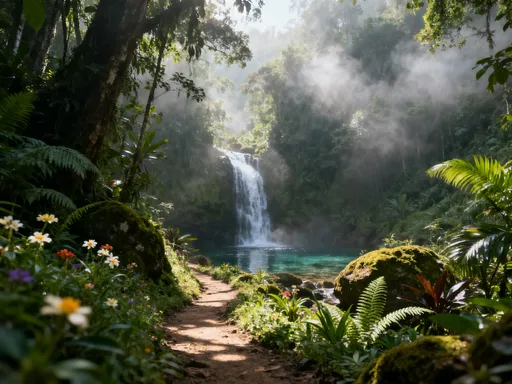
For families or less experienced hikers, there are gentler routes, such as the path around Charco de la Chorrera, a small waterfall and natural pool near the town of Baena. Here, children can splash in shallow water while adults relax under shade trees. It’s a perfect introduction to the region’s natural beauty without requiring technical skill or long distances. The key is to come prepared—bring water, wear sturdy shoes, and start early to avoid the midday heat. And always follow Leave No Trace principles: take your trash, stay on marked paths, and respect wildlife.
Endless Horizons: The Sea of Olive Trees
Drive in any direction from Córdoba, and soon you’ll be surrounded by olive trees. They cover the hills in endless rows, their silver-green leaves shimmering in the sun. This is not just farmland—it’s a cultural and ecological landscape shaped by thousands of years of human care. Córdoba is one of Spain’s top producers of olive oil, and walking through these groves is like stepping into a living museum of agriculture and tradition.
I joined a guided eco-walk through a family-run olive estate near the village of Luque. The owner, a third-generation farmer named Manuel, met us at the gate with a basket of freshly picked olives. As we walked, he explained the cycle of the harvest—how olives are collected by hand or with small rakes in late autumn, how the oil is pressed within hours to preserve flavor, and why his family refuses to over-irrigate or use chemical fertilizers. “The land gives us everything,” he said. “We must listen to it.”
The grove stretched for dozens of hectares, with trees so old their trunks were twisted into sculptures by time. Some were over 500 years old, surviving droughts, wars, and changing economies. Their roots run deep, holding the soil in place and supporting a network of insects, birds, and small mammals. This is not a monoculture in the industrial sense—beneath the trees, wildflowers bloom, and hares dart between rows. It’s a working landscape that also functions as a habitat.
What surprised me most was the silence. No tractors, no loud machinery—just the crunch of gravel underfoot and the occasional call of a skylark. The farm uses sustainable practices, including solar-powered irrigation and organic certification. They even host school groups and tourists to teach about the importance of responsible farming. “People think olive oil comes from a bottle,” Manuel said with a smile. “But it starts here, with the soil, the sun, and the hands that care for it.”
Visitors can now book olive oil tastings, seasonal harvest experiences, and farm-to-table meals at several estates in the province. These are not tourist traps but genuine invitations to understand where food comes from. Sitting on a wooden bench, sipping golden oil from a ceramic dish, I felt a deep appreciation for this quiet, enduring way of life. The sea of olive trees is not just a sight—it’s a story, written in leaves and soil, one drop of oil at a time.
Secret Springs and Natural Pools: Summer Escapes
When the temperature in Córdoba climbs above 40°C in July and August, even the shade feels hot. That’s when locals head to the mountains in search of cool water. Hidden springs and natural pools, fed by underground aquifers and mountain runoff, offer refreshing relief. These are not commercial swimming areas with lifeguards and snack bars, but quiet, natural spots where you can swim in crystal-clear water surrounded by rocks and trees.
One of the most beloved is the Baños de la Encina, located just across the provincial border in Jaén, about an hour’s drive from Córdoba. The name means “baths of the oak,” and it lives up to its name—small cascades flow into a series of rocky pools, shaded by tall trees. Families spread out on flat stones, children laugh in the shallows, and older couples sit in the shade with thermoses of cold tea. There’s a small parking area, basic restrooms, and a caretaker who ensures the site stays clean and safe.
For those seeking something even quieter, smaller streams in the Sierra Morena offer more secluded options. The Arroyo del Salobral, near the village of Santa Eufemia, is a hidden gem—accessible by a 15-minute walk through pine forest. The water is cold but inviting, and the pool is large enough for swimming but small enough to feel private. I visited in early June, when the wildflowers were in bloom and dragonflies hovered over the surface. I floated on my back, looking up at the blue sky framed by trees, and felt a deep sense of renewal.
These natural pools are not just about cooling off—they’re about slowing down. There’s no Wi-Fi, no music, no distractions. Just water, sun, and the rhythm of nature. To visit responsibly, bring reusable containers, avoid soap or sunscreen in the water, and take all trash with you. These places are fragile, and their beauty depends on care. But for those who respect them, they offer one of the purest forms of joy: the simple pleasure of being in nature, refreshed and renewed.
Birdwatching in Wetlands: A Quiet Adventure
Not all natural wonders are dramatic. Some are quiet, subtle, and require patience to appreciate. The wetlands of the upper Guadalquivir basin are exactly that—modest in appearance but rich in life. These marshy areas, fed by seasonal rains and river overflow, are hidden treasures for birdwatchers and nature lovers. They lack the fame of Doñana or Coto de Doñana, but they offer a more intimate, undisturbed experience.
I spent a morning with a local naturalist near the village of Palma del Río, where a stretch of flooded meadow attracts a surprising variety of birds. We walked slowly along a dirt track, binoculars in hand, speaking in whispers. Within minutes, we spotted a purple heron stalking through the reeds, its long legs moving with careful precision. A little egret flashed white against the green. Overhead, a black stork circled once before disappearing into the trees.
The real highlight came at a small observation platform built over a quiet pond. We waited in silence for nearly twenty minutes. Then, a flash of electric blue—a kingfisher, no bigger than a sparrow, darted from a branch and plunged into the water. It emerged with a tiny fish and vanished into the reeds. The moment lasted seconds, but it felt like a gift.
These wetlands are also important for migratory birds. In spring and autumn, they provide rest and food for species traveling between Africa and northern Europe. You might see pintail ducks, green sandpipers, or even a rare osprey. The best times to visit are early morning or late afternoon, when birds are most active. Bring a field guide or a birding app, wear neutral-colored clothing, and move slowly. The reward is not just in what you see, but in how you see it—with attention, humility, and wonder.
Why Wandering Matters: Reconnecting with Place
In a world of curated itineraries, five-star ratings, and Instagram checklists, wandering has become a radical act. It means letting go of the map, embracing uncertainty, and allowing yourself to be surprised. In Córdoba, every unplanned turn led me to something real—a farmer waving from a grove, a breeze through cypress trees, sunlight on river rocks. These moments didn’t fit into a travel blog post, but they stayed with me longer than any landmark.
Wandering reconnects us with place. It reminds us that destinations are not just points on a screen, but living, breathing landscapes shaped by time, people, and nature. In Córdoba, I learned to travel slowly, to listen more than I spoke, and to value silence as much as sight. I discovered that beauty isn’t always loud or famous—it often whispers, waiting for those willing to pause and pay attention.
But this kind of travel also carries responsibility. The wild spaces I loved—riverbanks, forests, wetlands—are fragile. They depend on clean water, sustainable farming, and protection from overdevelopment. As visitors, we must be mindful. We must follow trails, respect wildlife, and support local efforts to preserve these places. Because the magic of Córdoba’s natural side isn’t guaranteed—it’s a gift that must be protected.
So next time you visit, let go of the map. Wander. Listen. Step off the main road and into the olive-scented breeze. Let the river guide you, the mountains lift your gaze, and the silence fill your heart. Córdoba’s soul isn’t just in its stones—it’s in the whisper of wind through leaves, the flash of a kingfisher’s wing, the stillness of a mountain trail. These wonders don’t shout. They invite. And for those who answer, they offer a deeper, truer kind of travel—one that stays with you long after you’ve come home.