Where Art Meets Desert Magic – Ouarzazate’s Festival Soul
You know that feeling when a place just gets you? Ouarzazate did that to me. Nestled in Morocco’s sunbaked south, it’s not just the "Hollywood of Africa" for nothing—its festivals are pure art in motion. I never expected open-air murals, traditional music under starlit skies, and film screenings in ancient kasbahs to hit so deep. This is culture you don’t just see—you feel it. Let me take you through the colors, rhythms, and soul of a desert town that celebrates life through art.
The Gateway to Morocco’s Cinematic Desert
Ouarzazate stands where the High Atlas Mountains meet the edge of the Sahara, a town cradled by rose-gold cliffs and framed by swaying palm groves. Its dramatic landscape has drawn filmmakers from around the world for decades, earning it the nickname "the Hollywood of Africa." From epic historical dramas to sweeping fantasy sagas, the region’s natural backdrops have doubled as ancient Egypt, biblical deserts, and faraway galaxies. But beyond the cameras and crew, Ouarzazate has quietly cultivated its own creative identity—one rooted in storytelling, craftsmanship, and communal celebration. The very terrain that inspires cinema also shapes its festivals, where art is not confined to screens but spills into streets, courtyards, and open-air plazas.
What makes Ouarzazate unique is its role as a cultural crossroads. Berber, Arab, Saharan, and Mediterranean influences converge here, creating a rich tapestry of traditions. This blending is not accidental; it’s embedded in the town’s history as a trading post along trans-Saharan routes. Today, that legacy lives on in the way local festivals embrace diversity—not as a theme, but as a lived reality. Artists from rural villages share space with international performers, and ancient Amazigh rhythms echo alongside contemporary visual installations. The result is a festival culture that feels both deeply rooted and vibrantly modern, where the line between audience and artist often blurs.
The town’s cinematic reputation has also elevated local awareness of visual storytelling. Residents take pride in their role as extras, set builders, and costume designers, many of whom have passed down skills through generations. This pride translates into festival programming that values authenticity over spectacle. Unlike commercialized tourist events elsewhere, Ouarzazate’s celebrations are not performative—they are participatory. Visitors don’t just watch; they are invited to paint, dance, weave, or even help construct temporary art installations. The desert air hums not just with heat, but with creative energy.
Festivals as Living Art: The Pulse of Ouarzazate
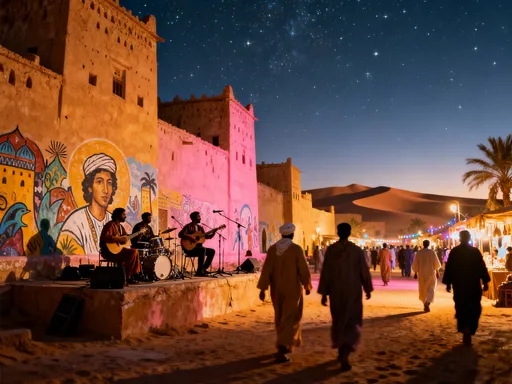
In Ouarzazate, festivals are not mere calendar events—they are living, breathing expressions of community identity. They transform the town into an open-air gallery, where every wall, alleyway, and plaza becomes a canvas. One of the most striking examples is the annual Festival of Amazigh Cinema, which celebrates indigenous North African filmmaking while spotlighting oral traditions, textile art, and musical heritage. During the event, outdoor screens are erected in the heart of the medina, and films are projected onto the sun-warmed walls of centuries-old kasbahs. Audience members sit on woven rugs, sipping mint tea as stories unfold under a canopy of stars.
But the festival experience extends far beyond the screen. Local artists host live painting sessions in public squares, their brushes dancing across large canvases that later become permanent murals. Children and elders alike gather to try their hand at natural fabric dyeing using henna, saffron, and indigo—colors that echo the earth itself. Sculptors carve intricate patterns into clay and wood, their work emerging in real time as passersby pause to watch. These are not demonstrations; they are collaborations. The festival becomes a shared studio, where creativity flows freely and mistakes are celebrated as part of the process.
Music, too, is more than performance here. While the famous Gnaoua World Music Festival takes place in Essaouira, its spirit resonates in Ouarzazate through regional spin-offs that blend spiritual rhythms with modern instrumentation. Drum circles form spontaneously in courtyards, drawing in travelers and locals who may not speak the same language but move to the same beat. Women in hand-embroidered djellabas sway beside young men strumming lutes, their voices rising in call-and-response chants that have echoed across the desert for generations. These moments are not staged—they are organic, born from a deep cultural memory that festivals help keep alive.
Behind the Scenes: How Local Art Thrives During Festivals
Beneath the vibrant surface of Ouarzazate’s festivals lies a network of artisans whose work forms the backbone of this cultural renaissance. Woodcarvers from the nearby village of Aït Benhaddou spend months preparing intricate doors and panels, their chisels tracing geometric patterns passed down through families. Weavers from the Draa Valley bring hand-spun wool dyed with natural pigments, creating rugs that tell stories through color and symbol. Calligraphers, often trained in traditional Quranic schools, inscribe poetic verses onto leather and ceramics, their flowing script a bridge between art and devotion.
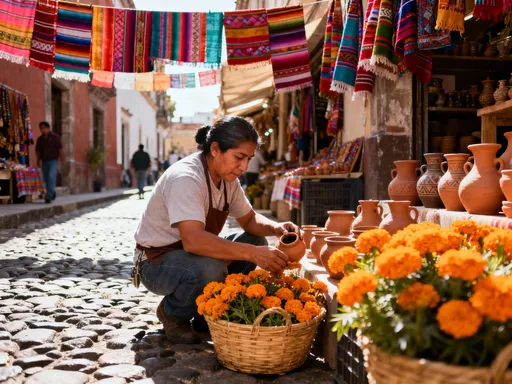
Festivals provide these artists with more than just visibility—they offer a sustainable livelihood. Artist cooperatives, many of which are women-led, set up stalls during events, selling directly to visitors without intermediaries. This direct exchange ensures fair compensation and fosters personal connection. A mother from Zagora might explain how each stripe in her rug represents a season of harvest, or a young potter from Skoura might demonstrate how he shapes clay using methods unchanged for centuries. These interactions are not transactions; they are dialogues, enriching both buyer and maker.
Tourism during festival seasons also supports local infrastructure in meaningful ways. Family-run guesthouses see increased bookings, small cafes thrive on increased foot traffic, and transport providers benefit from longer stays. Crucially, this economic boost does not come at the cost of authenticity. Unlike destinations that dilute their culture for mass appeal, Ouarzazate’s festivals are organized with community input, ensuring that commercial elements enhance rather than overshadow tradition. The goal is not to attract the largest crowd, but the most respectful one.
Film, Light, and Shadow: Ouarzazate’s Unique Festival Aesthetics
The decades-long presence of international film crews has left an indelible mark on Ouarzazate’s artistic sensibilities, particularly in how light, shadow, and space are used during festivals. Nighttime projections have become a signature feature, with short films, animations, and archival footage cast onto the textured surfaces of ancient walls. The uneven plaster and sun-cracked stone add texture to the images, making each screening a one-of-a-kind visual experience. These projections are not mere entertainment—they are storytelling in its most elemental form, where the building itself becomes part of the narrative.
Open-air screenings in natural amphitheaters are another hallmark. One of the most beloved takes place in a secluded valley just outside town, where rows of cushions are arranged beneath a sky dusted with stars. The silence between scenes is filled only by the whisper of wind through palms and the occasional call of a night bird. Here, the absence of urban noise amplifies the emotional weight of the films, many of which explore themes of identity, migration, and resilience. The desert setting doesn’t distract—it deepens the impact.
Youth engagement is central to this cinematic legacy. During major festivals, local organizations host filmmaking workshops for teenagers, teaching them everything from scriptwriting to editing on mobile devices. Some of these young creators go on to submit their work to the festival’s youth category, where their perspectives—on family, tradition, and change—are celebrated with the same reverence as professional entries. This investment in the next generation ensures that Ouarzazate’s storytelling traditions continue to evolve, not fade.
Choosing the Right Festival: A Traveler’s Guide to Timing and Experience
For travelers seeking an authentic cultural experience, timing is everything. Ouarzazate hosts festivals throughout the year, but the most artistically rich seasons are spring and autumn. Spring, from March to May, brings the Festival of Amazigh Cinema and several music-focused events that celebrate the renewal of life after winter. The weather is mild, the air is sweet with blooming roses from the nearby Valley of Roses, and the town is awash in color—perfect for those drawn to visual and musical expression.
Autumn, particularly September and October, offers a different rhythm. This is when heritage and film take center stage, with events that delve into oral history, ancestral crafts, and regional cinema. The light during these months has a golden quality, ideal for photography and long desert walks. Temperatures are still warm but not oppressive, making it easier to explore outdoor installations and attend evening performances without discomfort.
Travelers also have a choice between large-scale festivals and smaller, community-driven gatherings. The bigger events offer more programming and international performers, but they can feel crowded. For a more intimate experience, consider visiting during one of the local cooperative-led festivals, often held in village squares or private courtyards. These smaller events may have fewer advertised attractions, but they offer deeper interaction with artists and a stronger sense of belonging. There’s no wrong choice—only different ways to connect.
Beyond the Festival Grounds: Art in Everyday Ouarzazate
The spirit of Ouarzazate’s festivals doesn’t disappear when the final drumbeat fades. It lingers in the everyday—a carved wooden door here, a mosaic tile courtyard there, a spontaneous flute melody drifting from an open window. The town’s galleries, though modest in size, are treasure troves of contemporary Berber art, where painters reinterpret ancient symbols using modern palettes. One gallery in the old town features a series of abstract works inspired by desert winds, each piece titled with a line of Amazigh poetry.
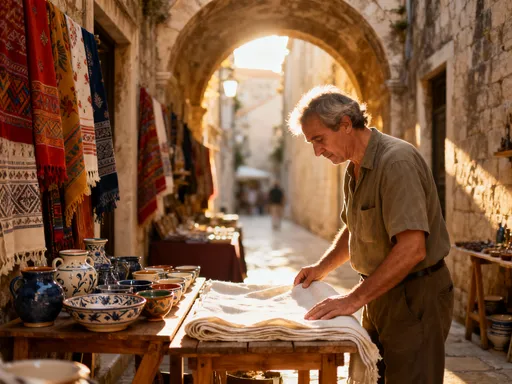
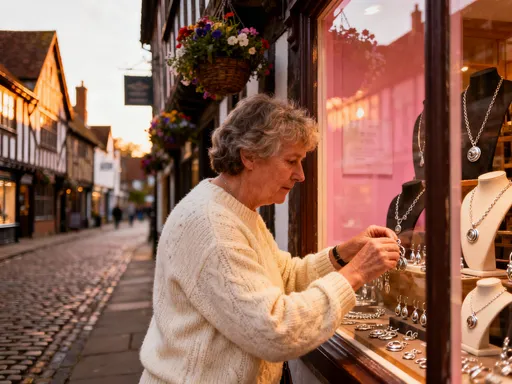
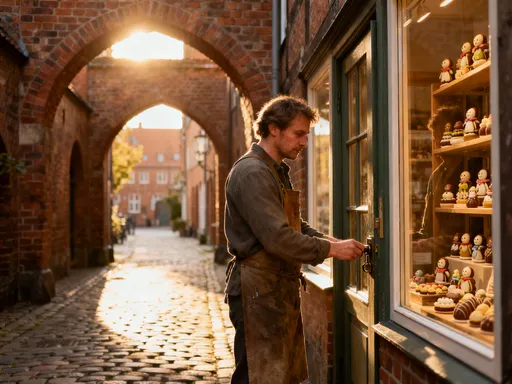
Artisan markets operate year-round, offering everything from hand-hammered silver jewelry to leather-bound notebooks adorned with traditional motifs. Unlike souvenir stalls in tourist-heavy cities, these items are made on-site, often while you watch. A craftsman might invite you to try stamping a design into soft leather, or a weaver might explain how she sources her dyes from local plants. These moments of participation keep the festival ethos alive, reminding visitors that art here is not a product, but a practice.
Even a casual walk through the medina reveals the town’s creative pulse. Doorways are framed with intricate cedar carvings, each telling a story of protection, prosperity, or faith. Courtyards bloom with hand-painted tiles in cobalt, saffron, and emerald—colors that seem to capture the essence of the desert at different times of day. And if you’re lucky, you might stumble upon an impromptu performance: a group of musicians playing for neighbors, or a storyteller reciting legends to a circle of children. These are not staged for tourists—they are real, unfolding moments of cultural continuity.
Preserving Culture: The Future of Art and Festivals in a Changing Morocco
As Morocco continues to modernize, Ouarzazate faces the delicate challenge of preserving its cultural soul while embracing change. Tourism, while beneficial, brings risks—overcrowding, commercialization, and the temptation to simplify traditions for broader appeal. Some fear that the authenticity that makes the town’s festivals so special could be diluted. Yet, there are strong efforts in place to protect this heritage. Local councils work with artists and elders to ensure programming remains community-led, and strict guidelines prevent corporate branding from overtaking public spaces.
At the same time, new opportunities are emerging. Digital platforms now allow festivals to reach global audiences through live streams and virtual exhibitions, enabling cultural exchange without physical strain on the town. Young artists are blending traditional techniques with modern media, creating hybrid works that speak to both elders and peers. A recent installation at the spring festival featured a video projection of a grandmother weaving, overlaid with her granddaughter’s spoken reflections on identity—past and present in dialogue.
Perhaps the most hopeful sign is the deep sense of pride among residents. They do not see their art as a relic, but as a living, evolving force. Festivals are not attempts to preserve the past, but ways to reimagine the future. As one local weaver told me, "We are not keeping tradition alive by freezing it. We are keeping it alive by letting it grow." In Ouarzazate, art is not a performance for outsiders—it is a way of being. And as long as that truth remains, the festivals will continue to pulse with the same soul that first drew me in under a desert sky.