This Is Not a Dream: Uyuni’s Surreal Architecture Under the Sky
Have you ever walked on a mirror stretching to the horizon? In Uyuni, Bolivia, the salt flat transforms reality into fantasy—and the architecture here doesn’t compete with nature, it converses with it. I didn’t expect simple shapes and raw materials to hit me so hard. What I found were structures that echo the vastness, silence, and brilliance of the landscape. This is more than travel—it’s a sensory dialogue between earth and design.
Arrival in a World Without Edges
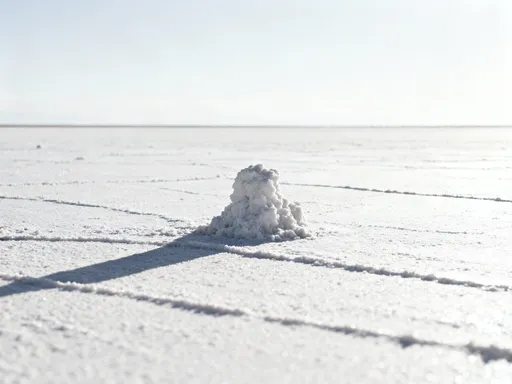
Stepping onto the Salar de Uyuni is like entering a realm where geography forgets its boundaries. The 10,000 square kilometer salt crust, one of the largest in the world, flattens the earth into an uninterrupted plane. Under the midday sun, the surface gleams with a blinding whiteness that diffuses light in every direction. During the rainy season, a shallow layer of water creates a perfect reflection, merging sky and ground until the horizon vanishes entirely. In this environment, depth perception falters. Trees in the distance appear to float mid-air. People seem to walk on clouds. It is disorienting, humbling, and profoundly beautiful.
Amid this boundless expanse, human structures do not assert dominance. They appear not as intrusions, but as quiet participants in the landscape. The few buildings that rise from the salt are low, angular, and understated—deliberately designed to complement rather than contrast. Unlike the soaring monuments of cities, Uyuni’s architecture embraces minimalism as a necessity. The overwhelming scale of the natural world demands it. Here, design is not about expression, but about integration. Architects do not fight the emptiness; they learn to speak its language.
The absence of visual clutter heightens every detail. A single doorway carved into a salt wall becomes a focal point. A narrow staircase ascending into the sky draws the eye like a pilgrimage. These structures do not distract from the environment—they guide attention deeper into it. In this way, architecture in Uyuni functions not as shelter alone, but as a lens, framing the infinite. Visitors often report a shift in awareness: a slowing of time, a sharpening of senses. The land itself becomes the primary architect, shaping not only the forms of buildings but the experience of those who move through them.
The Rise of Salt-Based Architecture
The most defining feature of Uyuni’s built environment is its material: salt. Harvested directly from the Salar, salt blocks are cut into uniform bricks and dried under the sun. These crystalline units, each weighing several kilograms, are stacked like puzzle pieces to form walls, platforms, and entire buildings. The process is ancient, passed down through generations of local communities who have long understood the structural potential of their surroundings. Today, this tradition lives on—not as a relic, but as a living, evolving practice.
One of the most well-known examples is the Palacio de Sal, a hotel constructed almost entirely from salt blocks. Walking through its corridors is an experience of texture and temperature. The walls feel cool and slightly gritty under the fingertips, their surfaces catching light in delicate, faceted patterns. Sound behaves differently here—voices echo softly, absorbed by the dense, porous material. At night, the stillness is nearly absolute, broken only by the occasional creak of a salt-bound beam adjusting to the desert’s thermal shifts.
Using salt as a building material is not merely symbolic—it is deeply practical. Salt is abundant, free, and locally sourced, eliminating the need for costly transportation of conventional construction supplies across remote terrain. It is also naturally insulating, helping to moderate indoor temperatures in a region where days can be scorching and nights bitterly cold. While not impervious to moisture, salt structures are surprisingly durable when maintained properly. Many are sealed with a protective resin or built on raised foundations to prevent water absorption during rare rains.
From an environmental standpoint, salt architecture represents a model of sustainability. It produces minimal waste, requires no deforestation, and leaves a negligible carbon footprint. More importantly, it honors indigenous knowledge and supports local economies. The labor-intensive process of harvesting and assembling salt blocks provides employment for residents of nearby villages, ensuring that tourism benefits the people who call this landscape home. In a world increasingly aware of ecological responsibility, Uyuni’s salt buildings stand as quiet testaments to what is possible when design listens to place.
Design That Follows the Desert’s Rules
The architecture of Uyuni is not shaped by aesthetics alone—it is a direct response to environmental extremes. At over 3,600 meters above sea level, the region experiences intense ultraviolet radiation, sudden temperature swings, and powerful winds that sweep unimpeded across the flat. Every design choice reflects a strategy for survival. Buildings are intentionally low to the ground, minimizing wind resistance and reducing the risk of structural damage. Flat roofs, rather than sloped ones, serve dual purposes: they collect precious rainwater during the brief wet season and provide additional living or storage space.
Windows are kept small and strategically placed, often recessed into thick walls. This design limits heat loss during freezing nights while preventing overheating during the day. In some structures, double-glazed glass or tinted panels are used to filter UV rays, protecting both occupants and interior materials. Walls themselves are built with high thermal mass—salt and adobe retain heat slowly and release it gradually, creating a more stable indoor climate without relying on artificial heating or cooling systems.
Orientation also plays a critical role. Many buildings are aligned to maximize southern exposure, capturing sunlight during the shortest days of the year. Entryways are often positioned away from prevailing winds, sometimes tucked behind windbreak walls or natural elevations. Even the color palette is functional: white and light gray surfaces reflect sunlight, reducing heat absorption. These choices are not arbitrary—they are the result of centuries of adaptation, refined through trial, observation, and necessity.
Modern architects working in the region study these principles closely, integrating them into new projects without sacrificing comfort or safety. For example, some visitor centers incorporate solar panels and water recycling systems while maintaining traditional forms and materials. The goal is not to reinvent the wheel, but to deepen an existing wisdom. In Uyuni, good design is not measured by novelty, but by resilience. A building that endures is one that has learned to work with, not against, its environment.
When Modernity Meets Tradition
As tourism to the Salar de Uyuni has grown, so too has the need for infrastructure that balances functionality with cultural authenticity. Newer constructions—community centers, information hubs, and eco-lodges—reflect a thoughtful fusion of old and new. Architects are increasingly collaborating with local artisans, ensuring that contemporary needs do not erase traditional practices. The result is a built environment that evolves without losing its soul.
One such example is a visitor complex near the edge of the salt flat, constructed using a combination of salt blocks, volcanic stone, and recycled metal. The design respects the low-profile aesthetic of the region while incorporating modern amenities like Wi-Fi, accessible restrooms, and shaded gathering areas. Solar-powered lighting and rainwater harvesting systems operate quietly beneath the surface, supporting sustainability without disrupting visual harmony. The building’s layout encourages movement and contemplation, with open courtyards that frame views of the distant Andes.
These hybrid structures demonstrate that tradition and innovation are not opposites—they can be allies. By using salt and stone in new configurations, architects are able to meet safety standards and comfort expectations while preserving the essence of local identity. Even decorative elements—such as hand-carved doorways or woven textiles in communal spaces—serve as reminders of the cultural roots that anchor this place.
The challenge lies in resisting the temptation to overdevelop. Some early tourist facilities were criticized for prioritizing convenience over authenticity, using imported materials and generic designs that felt out of place. Today, there is a growing consensus among planners, architects, and community leaders that Uyuni’s uniqueness must be protected. This means limiting the scale of new construction, enforcing strict environmental guidelines, and ensuring that local voices are central in decision-making. Tourism brings opportunity, but only if it does not compromise the very qualities that make the destination special.
The Aesthetic of Silence and Space
In a world saturated with noise and visual clutter, Uyuni offers something rare: the beauty of absence. Its architecture does not fill space—it frames it. Buildings are positioned to highlight emptiness, creating compositions where the void becomes the subject. At sunrise, long shadows stretch across the salt, turning simple walls into dramatic silhouettes. At twilight, the sky ignites in hues of pink and gold, reflected infinitely in the moist surface, with structures appearing to float in a sea of light.
This interplay of light, reflection, and form creates a deeply meditative atmosphere. There are no billboards, no streetlights, no traffic. The only sounds are the crunch of salt underfoot and the occasional gust of wind. In this stillness, architecture takes on a spiritual quality. A single bench placed against a salt wall becomes a site of contemplation. A narrow corridor opens to a panoramic view, inviting pause and presence. These are not accidental effects—they are intentional design outcomes.
The aesthetic echoes principles found in minimalist and contemplative design traditions, such as Japanese wabi-sabi or Scandinavian functionalism, though it arises independently from them. Here, imperfection is not celebrated for philosophical reasons, but because it is inherent to the material. Salt blocks vary in size and color. Cracks appear over time. Surfaces erode slightly with each passing season. Yet these ‘flaws’ are not hidden—they are embraced as signs of life, of interaction with the elements.
This acceptance of transience gives the architecture a quiet dignity. It does not seek permanence, but presence. It acknowledges that all structures, like all things, are part of a cycle. In doing so, it invites visitors to slow down, to observe, to listen. In a culture that often equates value with visibility, Uyuni’s buildings whisper a different truth: that the most powerful designs are sometimes the ones that disappear into the landscape, leaving only a trace of their existence.
Living Inside the Landscape: A Stay at a Salt Lodge
Spending a night in a salt-built lodge is an experience that lingers long after departure. I stayed at a small eco-hotel on the outskirts of the Salar, where every surface—from the bed frame to the bathroom counter—was crafted from salt blocks. The room was compact but thoughtfully designed, with a large window facing west to capture the sunset. As darkness fell, the sky turned from amber to deep violet, and the salt walls seemed to glow faintly, retaining the day’s warmth.
The texture of the space was unlike anything I had encountered. Running a hand along the wall felt like touching a giant crystal—gritty, cool, and slightly damp in the evening air. The silence was profound. Without the hum of city life or even the rustle of trees, sound traveled differently. A whisper echoed. A footstep resonated. The occasional drip of condensation from the ceiling marked the passage of time. It was both eerie and peaceful, a reminder of how rarely we experience true quiet.
Comfort levels were surprisingly high. The bed was firm but supportive, dressed in thick woolen blankets to combat the cold. A small electric heater provided supplemental warmth, though the salt walls did much of the work. The bathroom, while basic, was clean and functional, with a shower that delivered hot water on demand. The only notable quirk was the slight moisture on walls after a night fog, a natural consequence of the material’s porosity. Staff advised against leaning bags or clothing directly against surfaces, a small trade-off for the uniqueness of the experience.
For travelers considering an overnight stay, the experience is highly recommended—but with realistic expectations. This is not a luxury resort. It is a deliberate immersion into place. Those seeking opulence may be disappointed. But for those open to simplicity, authenticity, and a deep connection to the environment, it is unforgettable. Waking up to a sky full of stars, with the salt flat stretching endlessly in every direction, feels less like vacation and more like revelation.
Beyond the Salar: Urban Architecture in Uyuni Town
A short drive from the salt flat lies the town of Uyuni, a bustling hub that supports the region’s tourism industry. Here, the architectural language shifts dramatically. While the Salar inspires poetic minimalism, the town embraces practicality. Buildings are constructed from corrugated metal, adobe bricks, and concrete, materials chosen for durability and affordability. Facades are often brightly painted in blues, reds, and yellows, a cheerful contrast to the monochrome desert.
The train cemetery on the town’s edge—a collection of rusted locomotives abandoned since the early 20th century—stands as a monument to industrial history. Nearby, markets buzz with activity, their temporary stalls made of wood and tarpaulin. Transportation centers, police stations, and small hotels line the main roads, designed for function rather than form. This utilitarian aesthetic is not a failure of design—it is a response to real-world needs. Uyuni town must house workers, store supplies, and serve thousands of visitors annually, all in a remote location with limited resources.
Yet even here, traces of the surrounding landscape influence design. Some newer buildings incorporate salt blocks into decorative elements—facades with salt inlays, benches made of crystalline bricks. Public art often features motifs of the Salar, the Andes, and native wildlife. Cultural centers showcase local textiles and crafts, preserving identity in the face of globalization. The contrast between town and flat is not a contradiction, but a dialogue—one between daily life and natural wonder, between necessity and inspiration.
Urban planning in Uyuni faces ongoing challenges: waste management, water scarcity, and infrastructure strain. Local authorities are working with environmental groups to implement sustainable practices, such as solar energy projects and improved waste recycling. The goal is not to turn the town into a replica of the Salar’s aesthetic, but to support tourism responsibly while maintaining the quality of life for residents. In this balance, Uyuni offers a broader lesson: that development and preservation can coexist, provided they are guided by respect and foresight.
Uyuni teaches a rare lesson: that architecture doesn’t need to dominate to be powerful. Here, design doesn’t shout—it whispers. By learning from the land, builders create spaces that don’t just stand in the environment but belong to it. In a world obsessed with bold statements, Uyuni’s quiet structures remind us that true beauty often lies in listening, not imposing. Maybe the future of design isn’t about innovation alone—but about reverence.